Ullswater, one of the Lake District’s most picturesque valleys in the UNESCO World Heritage Site, welcomes hundreds of thousands of visitors each year. People fall in love with this particular spot because of the deep connection with magnificent natural wonders and sense of peace. However, whilst the resident population is under 3,000, the visitor population swells by orders of magnitude greater, with up to 10,000 accommodated overnight in high season —with many accommodation providers positioned on minor roads. The vast majority of visitors (80%) come for the day, and most arrive by car. As a result, Ullswater suffers not from too many visitors, or too much love, but from too many vehicles, often all trying to get in at the same time.
In response, SITU (Sustainable and Integrated Transport for Ullswater) has proposed a bold but realistic vision—not a car-free valley, but one where most visitors and residents choose to move around using sustainable modes: bike, bus, boat, or boot. In fact, many of our visitors told us anecdotally in 2025 that they prefer to travel without their cars whilst they are here, as long as there are good alternatives. The goal is clear: reduce carbon emissions, ease congestion, and ensure that everyone—residents and visitors alike—can access affordable, reliable transport. Just as importantly, the aim is to position Ullswater as a world-leading destination for car-free travel.
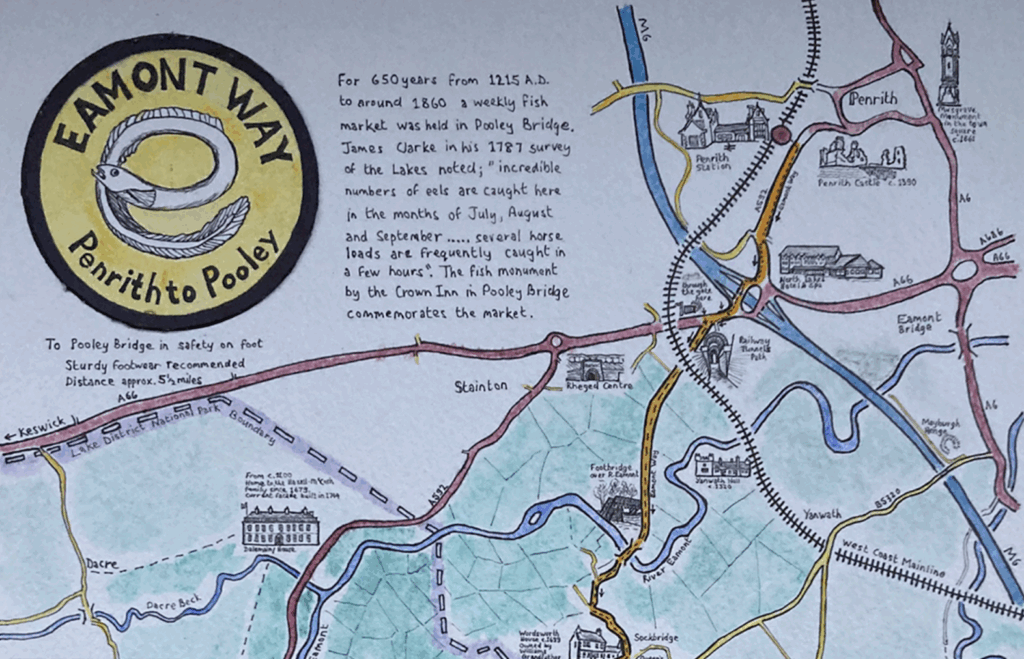
Central to this vision is creating practical, cost-effective, and enjoyable alternatives to car use. One such option is the new Eamont Way—a flagship footpath project and the first major success of this integrated transport initiative.
A Response: The Eamont Way
The Eamont Way is a 5.5-mile route linking Penrith directly with Pooley Bridge. It offers a scenic, family-friendly walking alternative to taxis, buses, or car travel for visitors arriving by train. The route follows the River Eamont, crossing it twice, and passes through countryside, bridleways, and designated footpaths before ending near Pooley Bridge.
From there, visitors can continue their journey on foot, bus or by boarding the Ullswater Steamers, which connect Pooley Bridge with key destinations like Howtown, Glenridding, and Aira Force—each accessible without the need for a car.
Impact and Success
Since opening in April 2023, the Eamont Way has become a key part of Ullswater’s sustainable transport system. It was developed through a major collaboration between SITU, the Friends of the Ullswater Way, and the Lake District National Park, with support from a wide network of stakeholders including:
- Eden District Council
- Cumbria County Council
- The Ullswater Association
- Ullswater Steamers
- Several local parish councils
- Landowners, farmers, and local designers
The project has had measurable success:
- A consistent average of about 500 walkers per month, including both locals and visitors
- Economic benefits to local businesses in Penrith, Pooley Bridge, and along the route
- Strengthened the use of Penrith Railway Station as a key sustainable travel gateway
- Proven that car-free travel from cities (e.g., London) to Ullswater is not only possible but enjoyable.
A typical itinerary now includes arriving at Penrith Station, walking the Eamont Way to Pooley Bridge, and continuing by boat to Glenridding—all within a day. This example demonstrates that with well-integrated alternatives, sustainable travel to and within Ullswater can be seamless and appealing.
Key Lessons
- Integration is Essential
The success of the Eamont Way is rooted in its connection with other modes of transport: rail and bus networks, the local steamer service, and walking routes across the valley. - Community Collaboration Works
The route was designed and promoted by volunteers and community groups, supported by local authorities, farmers, and landowners. This collaborative model ensured both local ownership and long-term support. - Sustainable Can Be Desirable
The Eamont Way doesn’t just offer an eco-friendly alternative—it offers a better experience. It showcases the landscape, engages local heritage, and invites a slower, more rewarding pace of travel.
Looking Ahead
The Eamont Way is just the beginning. As Ullswater builds toward becoming an internationally recognised model for car-free tourism, the lessons learned from this project will shape future developments—additional routes, better signage, improved public transport, and continued collaboration.
The message is simple but powerful: the future of rural tourism doesn’t rely on fewer visitors—it depends on better ways to welcome them.